
Corporate Vastu: Strategic Spatial Alignment for Executive Performance
The article argues that a corporate office should be viewed as a living energetic ecosystem rather than just a functional setup, applying the ancient Indian architectural philosophy of Vastu Shastra to workplace design. By aligning corporate departments with specific elemental zones (Pancha Bhootas), businesses can improve strategic execution, operational efficiency, and overall performance. Southwest (Earth Element): The ideal zone for CEOs and founders, providing the stability and authority required for long-term strategic decision-making and leadership during volatile times. Southeast (Fire Element):The prime location for sales and marketing teams, using the element's dynamic energy to fuel motivation, competitive drive, and faster deal closures. North (Water Element):Perfectly suited for finance and accounting departments to enhance meticulous data management, cash flow, and corporate reserves. Northwest (Air Element):The best fit for operations, logistics, and customer support to facilitate smooth communication and supply chain efficiency. Ultimately, Corporate Vastu functions as a form of environmental psychology that reduces organizational friction and boosts ROI.

Layashaktii

The modern corporate office is often viewed merely as a functional arrangement of desks, technology, and meeting rooms. However, from the perspective of classical Indian architectural philosophy, an office is a living energetic ecosystem. Vastu Shastra, the ancient science of space alignment, posits that the spatial positioning of individuals within an environment directly influences their cognitive clarity, decision-making capacity, and overall productivity. When applied to the corporate hierarchy, aligning key personnel with specific elemental zones can significantly optimize operational efficiency and enhance the return on investment.
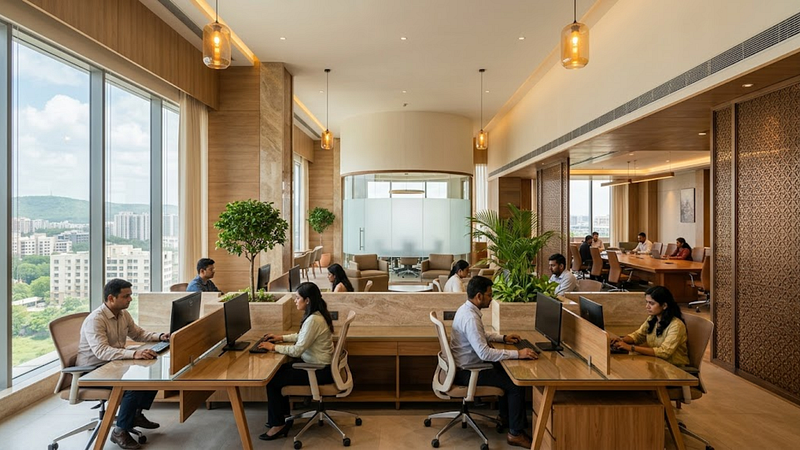
By understanding the subtle interplay of the five primordial elements, known as the Pancha Bhootas, corporate leadership can design workspace layouts that naturally support the distinct psychological and professional demands of various departments.

The Southwest Zone: Grounding the Founders and Leadership
The Southwest sector of any premises is governed by the Earth element, Prithvi, and is traditionally associated with stability, authority, and longevity. In a corporate structure, this zone is the most appropriate location for founders, chief executive officers, and managing directors.
The rationale behind this placement rests on the necessity for leadership to remain grounded during periods of market volatility. The Earth element provides the psychological fortitude required to make high-stakes decisions and execute long-term strategic planning. Seating the primary decision-makers in the Southwest ensures that their authority remains respected throughout the organizational hierarchy, thereby minimizing internal friction and governance challenges.

The Southeast Zone: Fueling the Sales and Marketing Engine
Conversely, the Southeast quadrant is dominated by the Fire element, Agni. Fire symbolizes energy, passion, conversion, and driving force. It is the element responsible for transforming potential into action.
For a corporate entity, the revenue generation engine resides within the sales, marketing, and business development teams. Placing these departments in the Southeast zone aligns their daily operations with the stimulating energies of Agni. This spatial alignment enhances the motivation of the workforce, sharpens competitive instincts, and accelerates transaction velocity. It ensures that the team maintains the high energy levels necessary to pursue targets and close critical commercial deals.

The North and Northwest Zones: Safeguarding Finance and Operations
The financial health of an enterprise requires precise management, transparency, and a steady influx of capital. The North direction is traditionally governed by the Water element and is associated with opportunities, liquid cash flow, and wealth accumulation. Therefore, the accounts, finance, and treasury departments are ideally situated in the Northern sector of the office. This positioning fosters meticulous attention to financial data and helps ensure the preservation of corporate reserves.

Meanwhile, the Northwest zone is influenced by the Air element, Vayu, which governs movement, communication, and logistics. This quadrant is highly suited for operations teams, customer support, and supply chain managers. Aligning operational staff with the Air element facilitates the smooth dispatch of goods, clears supply bottlenecks, and enhances communication with external vendors.

Conclusion
Corporate Vastu is not a matter of superstition, but rather a sophisticated methodology of spatial psychology and environmental design. By systematically placing founders in the stable Southwest, sales teams in the dynamic Southeast, and finance professionals in the prosperous North, businesses can create a harmonious environment that reduces operational friction. When spatial energy is aligned with professional responsibility, organizations frequently observe improved employee retention, sharper strategic execution, and a measurable increase in overall corporate performance.

To receive regular insights on classical architectural wisdom, strategic space alignment, and traditional knowledge systems for modern leadership, you are invited to join the official updates channel.
Related Articles


Comments (0)
No comments yet. Be the first to share your thoughts!