
The Architectural and Spiritual Architecture of Vastu Shastra
The alignment of the northern quadrant within Vastu Shastra represents a sophisticated integration of spatial geometry, elemental theory, and metaphysical governance. As the domain presided over by Lord Kubera and regulated by the planetary influence of Mercury, this sector directly dictates professional mobility and financial liquidity. By maintaining structural lightness and respecting the native Water element, inhabitants can prevent the stagnation of capital and invite vital commercial opportunities. When urban constraints introduce structural defects, targeted energetic remedies serve to recalibrate the environment, demonstrating that meticulous spatial stewardship is essential for fostering sustained economic resilience and intellectual clarity.

Amolendu H.
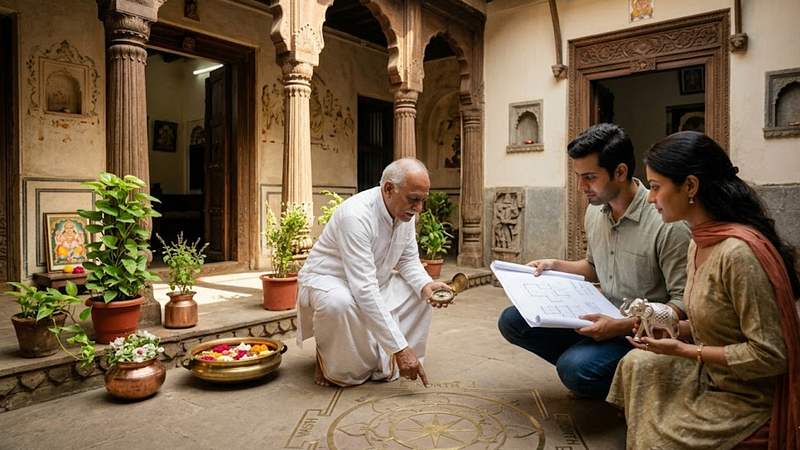
Vastu Shastra, the ancient Indian science of architecture and spatial geometry, operates on the fundamental principle that the built environment functions as an extension of the cosmos. Every structure, whether a domestic dwelling or a commercial enterprise, serves as a microcosm reflecting macrocosmic energies. Within this traditional framework, directional alignment is not merely a matter of geographic orientation; it is a sophisticated method of channelling specific metaphysical forces to harmonise human life with natural laws.
Among the cardinal directions, the North occupies a position of singular importance regarding material existence. Known traditionally as the Uttara direction, this quadrant is intrinsically linked to the governance of wealth, material resources, and professional advancement. In the classical lexicon of Vastu Shastra, the configuration of the North dictates the fluidity of one's financial reality, serving as the conduit through which cosmic abundance translates into tangible prosperity.
The Deity of the Wealth Quadrant: Lord Kubera
To comprehend the significance of the North, one must understand its presiding deity, Lord Kubera. In Vedic cosmology, Kubera is designated as the custodian of the universe's wealth and the king of the Yakshas, the mystical guardians of earthly treasures. Unlike Lakshmi, who represents spiritual and holistic prosperity, Kubera governs the precise mechanisms of accumulation, preservation, and distribution of material assets.
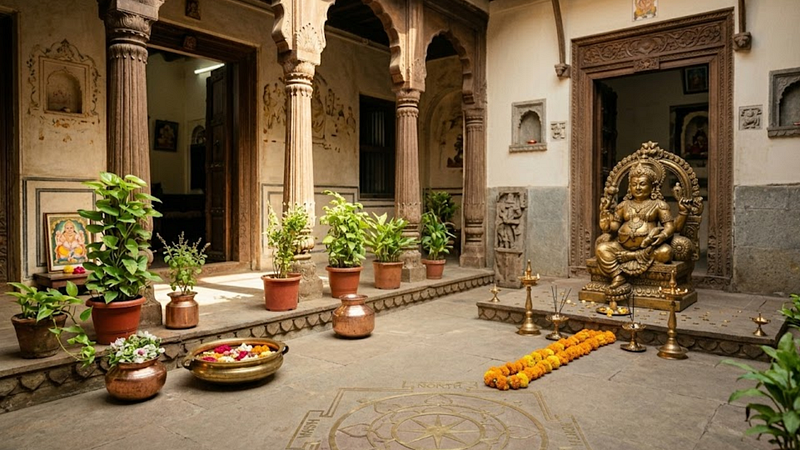
Aligning the northern sector of a structure is an act of establishing resonance with Kubera's energy. When this zone is balanced in accordance with traditional tenets, it acts as a magnet for financial opportunities, ensuring that the inhabitants possess the necessary liquidity to navigate economic realities with dignity and ease.
The Elemental Governance of the North
The directional efficacy of the North is further reinforced by its elemental association. This quadrant is ruled by the Water element, or Jala Tattva. In metaphysical discourse, water is the ultimate symbol of flux, purification, and continuous movement; it represents the capacity to flow without impediment.
When applied to financial matters, the Water element translates directly into liquidity. Just as a stagnant pool of water breeds impurities, a blocked northern zone stagnates cash flow and constricts career opportunities. Conversely, a free-flowing, unburdened northern sector allows capital to circulate dynamically, preventing financial bottlenecks and fostering a state of sustainable economic health.
Planetary Influences: The Role of Mercury
In addition to its deific and elemental associations, the North is astrologically governed by the planet Mercury, known in Sanskrit as Budha. Mercury is the celestial archetype of intellect, communication, commerce, and analytical acumen. Its influence over the northern zone underscores the intellectual component of wealth creation.
Financial prosperity is rarely a product of chance; it requires astute calculation, clear communication, and strategic foresight. A well-maintained North enhances the mercurial faculties of the residents, sharpening their business insight and enabling them to discern profitable avenues in career and commerce.
Identifying Impediments to Financial Liquidity
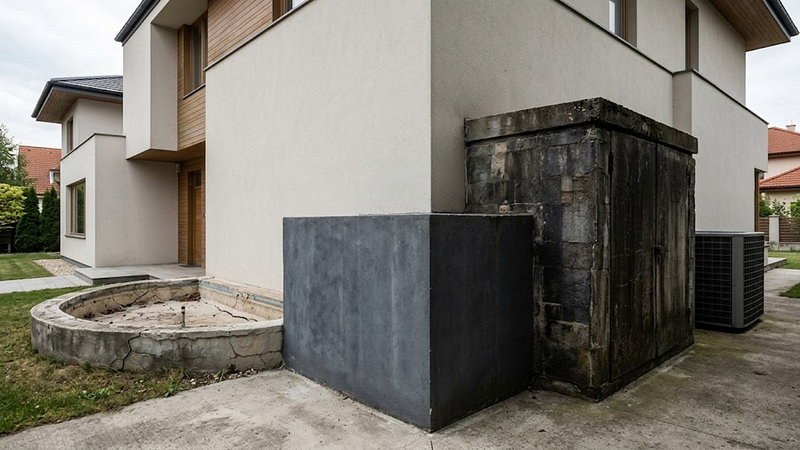
Before one can implement corrective measures, it is vital to identify the structural and spatial anomalies that compromise the integrity of the northern zone. In the vocabulary of Vastu Shastra, these defects are known as Vastu Doshas. The presence of heavy, immovable structures in the North constitutes a severe infraction against the natural order of this space.
Furthermore, placing a toilet, a kitchen, or a waste disposal unit in this quadrant severely disrupts the elemental balance. A toilet flushes away the positive energies of Kubera, whilst a kitchen introduces the Fire element, Agni, which effectively evaporates the beneficent attributes of the native Water element.
Architectural Principles for Optimising the North
To invite the benevolent gaze of Lord Kubera, the northern sector of any building must be characterised by lightness and openness. Classical texts prescribe that this zone should possess a lower floor level and thinner walls compared to the Southern and Western quadrants of the structure.
Windows and balconies placed in the North are highly advantageous, as they facilitate the ingress of the subtle, life-affirming magnetic currents that flow from the North Pole to the South Pole. Ensuring that this area remains uncluttered is the primary prerequisite for unlocking career growth and financial stability.

Colour Psychology and Spatial Resonance
The choice of colours within the northern zone plays a significant role in maintaining its vibrational frequency. Because this sector is governed by the Water element, the interior palette should reflect this relationship. Shades of light blue, soft green, and neutral whites are highly recommended.
Green is particularly auspicious as it represents Mercury and denotes growth, renewal, and financial expansion. Dark colours, particularly intense reds or deep blacks, should be systematically avoided, as they introduce conflicting elemental energies that destabilise the financial equilibrium of the household.
Remedies for Structural Imbalances
In contemporary urban architecture, it is often difficult to alter structural realities. When a northern defect cannot be physically demolished, subtle energetic remedies must be employed to mitigate the negative repercussions. The strategic placement of a brass vessel filled with clean water can serve as a powerful metaphoric anchor for the Water element.
Additionally, installing a mirror on the northern wall can visually and energetically double the space, thereby enhancing the attributes of openness and expansion. These remedies do not alter the physical concrete, but they recalibrate the subtle energetic field of the environment.
The Intersection of Career Opportunities and Cash Flow
It is a common misconception that wealth is merely about the accumulation of currency. True financial health involves the continuous generation of fresh opportunities. The North direction specifically governs the arrival of new clients, job offers, promotions, and business ventures.
When an individual experiences a protracted period of professional stagnation, the cause can frequently be traced to a constriction in the northern sector of their workspace or home. Rectifying this zone restores the vital link between talent and opportunity, ensuring that one's professional efforts are met with appropriate financial remuneration.
The Concept of the Wealth Vase and Invocations
For those who wish to cultivate a deeper connection with the energies of Lord Kubera, traditional practices recommend the placement of specific sacred objects in the North. A consecrated Kubera Yantra or a formal representation of the deity may be positioned on a clean platform facing the South.
The objective of such placements is to create a focal point for intentionality and reverence. By maintaining the cleanliness of this sacred space, the residents demonstrate their readiness to receive and responsibly manage the material blessings overseen by the celestial treasurer.
Practical Measures for Everyday Liquidity
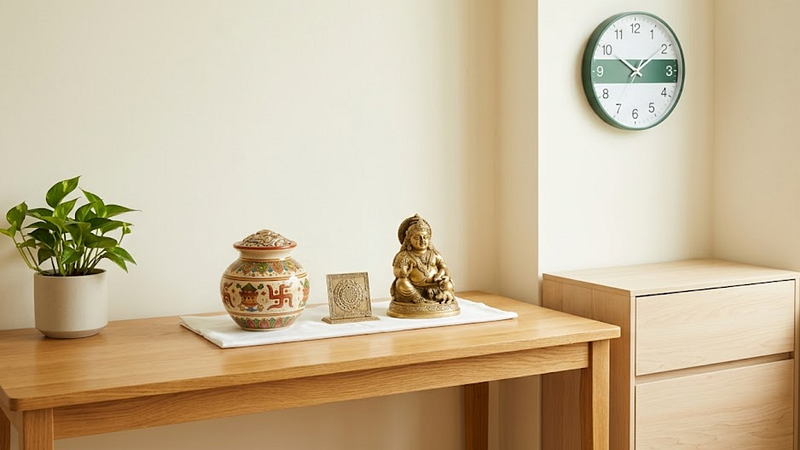
Let us consider the secondary structural enhancements that safeguard this zone. Beyond architectural rectifications, daily maintenance of the North is necessary to sustain its positive attributes. Clutter, dust, and broken items must be removed immediately. Documents pertaining to investments, bank accounts, and financial planning should ideally be stored in this quadrant, preferably in a light-coloured drawer or cabinet.
Ensuring that clocks placed on the northern wall are functional and display the correct time is another subtle yet effective measure. A stopped clock represents arrested progress, which directly opposes the dynamic nature of the Water element.
Synthesis of Spatial and Financial Stewardship
Ultimately, Vastu Shastra is not a system of superstition, but a discipline of spatial stewardship. The alignment of the North direction requires a conscious synthesis of physical cleanliness, aesthetic restraint, and elemental balance. By respecting the laws that govern the northern quadrant, one creates an environment that supports professional ambition and secures financial peace.
When the energies of Lord Kubera, Mercury, and the Water element operate in harmony, the built form becomes a vehicle for human flourishing. Wealth then ceases to be an elusive target; instead, it becomes a steady, predictable tide that supports the higher purposes of life.
Related Articles


Comments (0)
No comments yet. Be the first to share your thoughts!