

MainLogo
Amolendu H.

Amolendu H.

Amolendu H. is the founder of Layashaktii who comes with an astrological leneage of 45 years.

6 articles

Vastu Shastra for the Home Office: The Alignment of the Prosperity Desk

Vastu Shastra for the Home Office: The Alignment of the Prosperity Desk

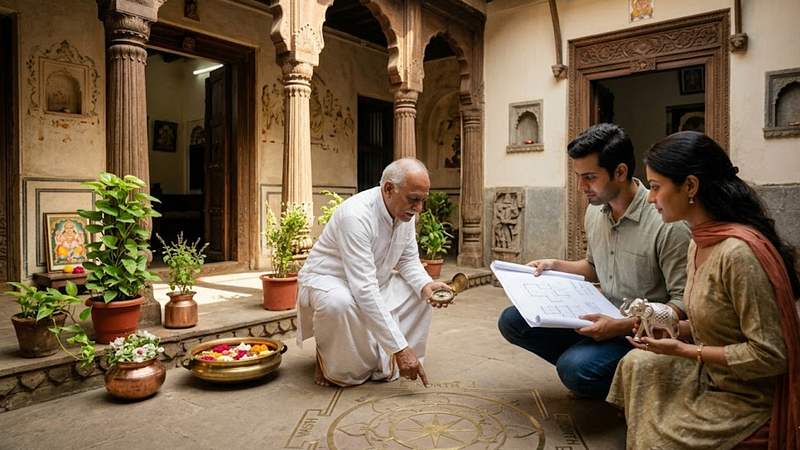
The integration of professional duties within the domestic sphere necessitates a structured approach to environmental design to sustain cognitive clarity and financial advancement. Grounded in the classical Indian architectural principles of Vastu Shastra, this study examines the spatial mechanics of the home office, prioritising the southwest quadrant for structural stability. It outlines the precise directional alignments—specifically facing north or east—required to optimise wealth accumulation and intellectual clarity. Furthermore, the text addresses elemental balancing through traditional instruments, including yantras and oil diffusers, alongside the conscious deployment of natural gemstones and bracelets to mitigate professional volatility and foster enduring prosperity.

Jun 16, 20265 min read
The Cosmological Foundation of the Northern Quadrant

The Cosmological Foundation of the Northern Quadrant

The structural disposition of the northern quadrant, or Uttara Disa, serves as a critical determinant of material stability and professional advancement within traditional Indian spatial mechanics. Governed by the deity Kubera and intrinsically linked to the fluid properties of the water element, this specific direction regulates the velocity of capital and the influx of commerce. Architectural imbalances, such as excessive structural weight or elemental contradictions, inevitably induce financial stagnation and professional inertia. Conversely, meticulous spatial refinement and the preservation of environmental clarity within this sector facilitate sustained liquidity, institutional resilience, and the uninhibited progression of economic opportunities.

Jun 9, 20264 min read
The Architectural and Spiritual Architecture of Vastu Shastra

The Architectural and Spiritual Architecture of Vastu Shastra

The alignment of the northern quadrant within Vastu Shastra represents a sophisticated integration of spatial geometry, elemental theory, and metaphysical governance. As the domain presided over by Lord Kubera and regulated by the planetary influence of Mercury, this sector directly dictates professional mobility and financial liquidity. By maintaining structural lightness and respecting the native Water element, inhabitants can prevent the stagnation of capital and invite vital commercial opportunities. When urban constraints introduce structural defects, targeted energetic remedies serve to recalibrate the environment, demonstrating that meticulous spatial stewardship is essential for fostering sustained economic resilience and intellectual clarity.

Jun 6, 20267 min read
The Geometry of Abundance: Classical Principles of the Ishan Zone

The Geometry of Abundance: Classical Principles of the Ishan Zone

The northeast quadrant, or Ishan zone, serves as the foundational conduit for cosmic energies within a structure, directly influencing the cognitive clarity and financial discernment of its inhabitants. Governed by the element of water and the planetary influence of Jupiter, this sacred space dictates the fluid progression of prosperity and mental peace. Physical clutter, heavy storage, or structural impurities within this sector create severe energetic obstructions, manifesting as psychological fatigue and stagnant economic growth. Through systematic spatial purification, strategic illumination, and deliberate architectural emptiness, individuals can eliminate internal anxiety, cultivate intellectual resilience, and establish an enduring framework for material sovereignty.

May 27, 20265 min read
The Economics of Alignment: Vastu Shastra as a Value Driver in Luxury Real Estate

The Economics of Alignment: Vastu Shastra as a Value Driver in Luxury Real Estate

The integration of Vastu Shastra within luxury real estate development has transitioned from a cultural preference to a significant financial imperative. This analytical overview examines how adherence to classical geometric and environmental principles influences asset valuation. By aligning structural layouts with cardinal orientations, developers satisfy the psychological and environmental demands of high-net-worth investors. This deliberate spatial planning mitigates market risks, eliminates the prohibitive costs of structural retrofitting, and accelerates capital velocity. Ultimately, the synthesis of ancient spatial laws with contemporary engineering standards enhances institutional credibility, establishing traditional alignment as a verifiable driver of long-term economic value.

May 20, 20263 min read
The Antiquity of Indian Fragrance: Sacred and Ritualistic Foundations

The Antiquity of Indian Fragrance: Sacred and Ritualistic Foundations

The tradition of Indian perfumery represents a sophisticated convergence of sacred ritual, classical science, and imperial patronage. From the Vedic fire sacrifices that utilized aromatic resins for environmental and spiritual purification, the practice evolved into a disciplined science documented in classical texts such as the Gandhashastra and Brihat Samhita. Under Mughal administration, the refinement of hydro-distillation techniques established a courtly culture of luxury centred on non-alcoholic, oil-based distillates. The city of Kannauj emerged as the definitive geographical locus of this industry, preserving the traditional deg-bhapka process to capture complex environmental profiles like Attar Mitti. In the contemporary era, the traditional attar bottle stands as an authentic, sustainable alternative to Western synthetic fragrances, navigating modern regulatory frameworks whilst preserving an ancient olfactory heritage.

May 19, 20265 min read