
The Economics of Alignment: Vastu Shastra as a Value Driver in Luxury Real Estate
The integration of Vastu Shastra within luxury real estate development has transitioned from a cultural preference to a significant financial imperative. This analytical overview examines how adherence to classical geometric and environmental principles influences asset valuation. By aligning structural layouts with cardinal orientations, developers satisfy the psychological and environmental demands of high-net-worth investors. This deliberate spatial planning mitigates market risks, eliminates the prohibitive costs of structural retrofitting, and accelerates capital velocity. Ultimately, the synthesis of ancient spatial laws with contemporary engineering standards enhances institutional credibility, establishing traditional alignment as a verifiable driver of long-term economic value.

Amolendu H.
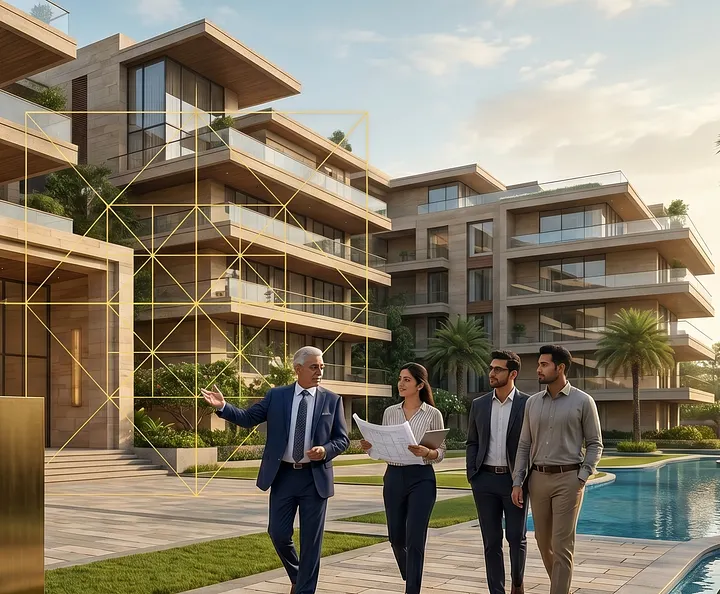
The contemporary luxury real estate market demands more than structural soundness and aesthetic refinement. Discerning buyers increasingly seek environments that promise holistic well-being, psychological comfort, and long-term prosperity. Within the Indian subcontinent and across the global diaspora, this demand manifests as a rigorous insistence on spatial harmony, specifically through the principles of Vastu Shastra.
For institutional real estate developers, compliance with these ancient spatial laws is no longer a peripheral marketing consideration. It has evolved into a core financial and strategic imperative. Far from being a sentimental addition, integration of these principles directly influences project velocity, risk mitigation, and premium pricing models.
Architectural Integrity and Spatial Coherence
Vastu Shastra operates on the premise that built environments interact dynamically with natural forces, specifically solar radiation, geomagnetic fields, and planetary winds. When a structure is aligned with these cosmic elements, it creates a palpable sense of equilibrium that enhances the occupant’s experience.
The Mathematics of the Mandala
At the core of classical spatial design lies the Vastu Purusha Mandala, a metaphysical planning grid that dictates the proportional distribution of space. Luxury developers who employ this geometric framework ensure that the architectural layout respects the cardinal directions.
The Northeast (Ishanya): Reserved traditionally for water bodies, open courtyards, or meditative spaces, ensuring an abundance of morning ultraviolet light.
The Southwest (Nairutya): Designated for structural mass and primary residential quarters, providing stability and protection from the harsh afternoon sun.
When developers implement these structural calculations during the master-planning phase, the resulting floor plans possess an inherent balance. This geometric discipline appeals directly to the subconscious requirements of high-net-worth buyers, who instinctively recognize the superior flow of light and ventilation.
Mitigating Market Risk and Accelerating Capital Velocity
The financial viability of a luxury residential or commercial development depends heavily on the speed of absorption. A project that remains stagnant on the market incurs compounding carrying costs, eroding institutional profitability.
Eliminating Redesign Costs
Retrofitting a completed structure to comply with alignment principles is a prohibitively expensive endeavour. It often requires structural demolition, the relocation of plumbing shafts, or the reconfiguration of primary entry points. By integrating scholarly consultants at the inception of the design brief, developers avoid these corrective expenditures. A certified compliant layout removes a significant barrier to purchase, ensuring a seamless transaction process from pre-launch to handover.
Capital Appreciation and Premium Valuation
Statistical observations within prime metropolitan markets indicate that compliant luxury inventories command a distinct premium over non-compliant counter-properties. Buyers perceive these residences as appreciating assets that safeguard family health and corporate wealth. Consequently, institutional developers can leverage this perception to justify higher square-footage rates, directly enhancing the gross development value of the asset.
Institutional Credibility and Corporate Governance
In the modern corporate landscape, luxury real estate developers are judged not only by their balance sheets but also by their respect for cultural heritage and sustainable practices. Vastu Shastra, when divorced from superstition and applied with academic precision, reveals itself as an ancient system of environmental psychology and micro-climate management.
Sustainable Luxury
The classical mandates regarding material selection, soil testing, and water conservation align closely with contemporary green building standards. By adopting these traditional methodologies, developers demonstrate a sophisticated synthesis of heritage and modernity. This balanced approach resonates with institutional investors and sovereign wealth funds that prioritise governance, cultural sustainability, and rigorous risk assessment.
Conclusion
The integration of Vastu Shastra in luxury real estate development represents a profound understanding of asset optimization. By treating these ancient spatial laws as rigorous architectural guidelines rather than superficial modifications, developers can elevate the intrinsic worth of their portfolios. Spatial alignment transcends mere aesthetic preference; it is a calculated investment in structural harmony, market resilience, and enduring capital value.
Related Articles


Comments (0)
No comments yet. Be the first to share your thoughts!