
The Cosmological Foundation of the Northern Quadrant
The structural disposition of the northern quadrant, or Uttara Disa, serves as a critical determinant of material stability and professional advancement within traditional Indian spatial mechanics. Governed by the deity Kubera and intrinsically linked to the fluid properties of the water element, this specific direction regulates the velocity of capital and the influx of commerce. Architectural imbalances, such as excessive structural weight or elemental contradictions, inevitably induce financial stagnation and professional inertia. Conversely, meticulous spatial refinement and the preservation of environmental clarity within this sector facilitate sustained liquidity, institutional resilience, and the uninhibited progression of economic opportunities.

Amolendu H.

In the classical architectural and spatial traditions of India, space is not a mere void, but a vibrant field of subtle energies governed by specific cardinal directions and celestial custodians. The northern quadrant, traditionally designated as Uttara Disa, holds a position of singular importance within this metaphysical framework. It is ruled by Kubera, the keeper of the celestial treasuries and the lord of material prosperity. While other directions govern aspects of health, longevity, and spiritual emancipation, the North is explicitly aligned with the manifestation of wealth, the sustenance of liquidity, and the continuous flow of economic opportunities.
Understanding this alignment requires an appreciation of the element associated with the North: water (Jala). In both philosophical discourse and practical commerce, water symbolises fluidity, movement, and adaptability. When the northern sector of a dwelling or a commercial enterprise is structurally balanced and energetically unencumbered, it facilitates a mirroring effect in the material realm. Cash reserves remain fluid, investments yield predictable returns, and the stagnation of capital is effectively prevented.
The Dynamics of Material Inflow and Career Progression

The influence of Kubera’s zone extends beyond the passive accumulation of wealth; it actively governs the channels through which livelihood and professional advancement occur. In contemporary economic structures, opportunities for career progression and business expansion are the primary engines of financial liquidity. A well-ordered northern space acts as a catalyst for these ventures, attracting favorable partnerships, institutional support, and vital client relationships.
Architectural impediments in this zone often manifest as systemic challenges in a professional career. For instance, the presence of heavy, immovable structures, the accumulation of redundant items, or the misplacement of elemental forces, such as fire, can disrupt the natural equilibrium of the North. Such disruptions frequently correlate with delayed payments, missed professional advancements, and an inexplicable constriction of incoming revenue streams. Conversely, ensuring that this sector remains spacious, well-ventilated, and illuminated allows the subtle currents of prosperity to articulate themselves without resistance.
Practical Measures for Spatial Realignment
To harmonise the northern sector with the energetic archetypes of Kubera, specific structural and aesthetic protocols must be observed. The primary objective is to maintain an environment that reflects the characteristics of clarity and unrestricted movement.
Optimisation of Space: The northern region of any structure should ideally possess lower floor levels and thinner walls relative to the South and West, encouraging the accumulation of positive, northward-flowing energies.
Elemental Harmony: Introducing elements that represent or support water, such as clear glass vessels, understated aquatic features, or shades of north-aligned colours like deep blues and whites, reinforces the directional archetype.
Removal of Obstructions: Heavy machinery, storage units for waste, and toilets situated in the exact North constitute severe energetic blocks that must be structurally mitigated or symbolically neutralised to preserve capital liquidity.
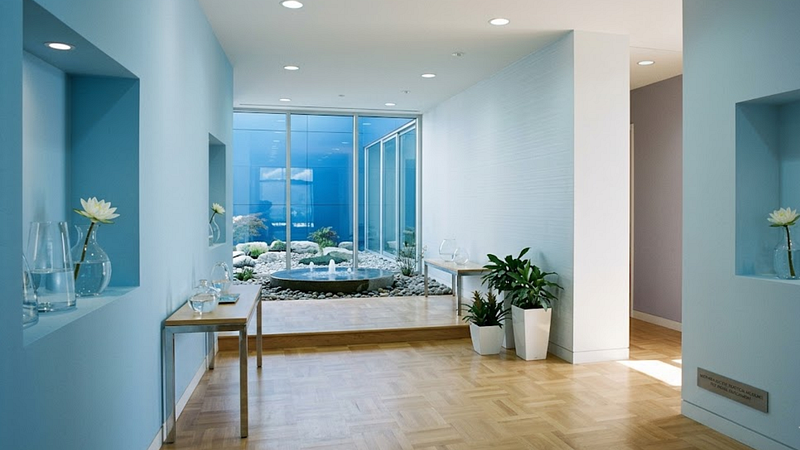
By systematically applying these principles, an individual or an enterprise establishes a physical environment that supports sustained financial health and resilience against economic volatility.
Institutional Continuity and Fiscal Resilience
The principles governing Kubera's zone are equally applicable to corporate and institutional environments where large-scale financial decisions are formulated. In corporate headquarters, positioning the financial department, treasuries, or strategic planning offices within the northern quadrant aligns the institutional mind with the virtues of prudent asset management and foresight. It fosters an environment where capital allocation is conducted with precision, and risk is balanced by robust liquidity reserves.

Conclusion
The alignment of the northern quadrant is not an exercise in superficial ornamentation, but a disciplined adherence to the timeless laws of spatial resonance. By respecting the domain of Kubera and maintaining the elemental integrity of the North, one creates an architectural vessel capable of attracting and retaining material substance. In an era marked by rapid economic shifts, ensuring the structural and energetic purity of this zone remains a prudent strategy for safeguarding both personal and institutional liquidity.
Related Articles


Comments (0)
No comments yet. Be the first to share your thoughts!